CRITICS QUESTION WHETHER THE FORMER OHIO UTILITY COMMISSION CHAIR SHOULD HAVE RECUSED HIMSELF MORE OFTEN TO AVOID ANY APPEARANCE OF BIAS.
By Kathiann M. Kowalski
This article provided by Eye on Ohio, the nonprofit, nonpartisan Ohio Center for Journalism in partnership with the nonprofit Energy News Network. Please join the Eye on Ohio free mailing list or the mailing list for the Energy New Network as this helps provide more public service reporting.
Concerns about the outsized influence of utility and fossil fuel interests have resurfaced as the Public Utilities Commission of Ohio begins steps to name a new commissioner after the sudden exit of Chair Sam Randazzo.
Randazzo resigned on Nov. 20 after an FBI team had searched his home and FirstEnergy released a mandatory quarterly report to the Securities and Exchange Commission. The report showed the company paid $4 million to an entity associated with Randazzo shortly before his appointment last year.
Now the Public Utilities Commission, or PUCO, has put out a call for applicants to fill the vacancy. Under Ohio law, a nominating council will review the applications and then nominate four candidates to the governor. Advocates have criticized the council, which only has one seat for a consumer advocate, as being too heavily tilted toward utility interests.
The exterior of the Carl B. Stokes Public Utilities building, a city government office building in downtown Cleveland (photo by Conor Morris)
In the spring, when people were ordered to stay at home to prevent the spread of COVID-19, all Ohio utilities stopped disconnecting service for customers who lost their jobs or were working fewer hours and couldn’t pay.
Starting in July, those moratoriums started to be lifted. The last moratoriums – Cleveland Public Power and the Cleveland Water Department – are set to end on Dec. 1.
Navigating payment plans, financial assistance programs and emergency funds can be frustrating. Plus, many community service agencies that sign up for these programs are closed to the public, and most applications must be completed online or by phone.
Advocates at these agencies say it’s a good idea to get your documents ready when calling for help, including associated utility bills, recent paychecks, and documentation of loss of income or confirmation of unemployment.
By simply dialing three digits (2-1-1), greater Clevelanders can make one call to find or give help.
The colder weather has brought with it the predicted spike in new coronavirus cases to the State of Ohio—and the rest of the world—as we all gather more closely, indoors.
In recent weeks, news about vaccine trial progress has brought hope to a coronavirus pandemic-weary global population—particularly those coping with the loss of family, friends, and colleagues to the lethal virus.
The fatigue of this pandemic, mixed with a seemingly insurmountable surge in new cases this fall, plus the hope of vaccines on the horizon, all together could lull us into relaxing our fight to contain coronavirus just as we reach our most dangerous levels of community spread.
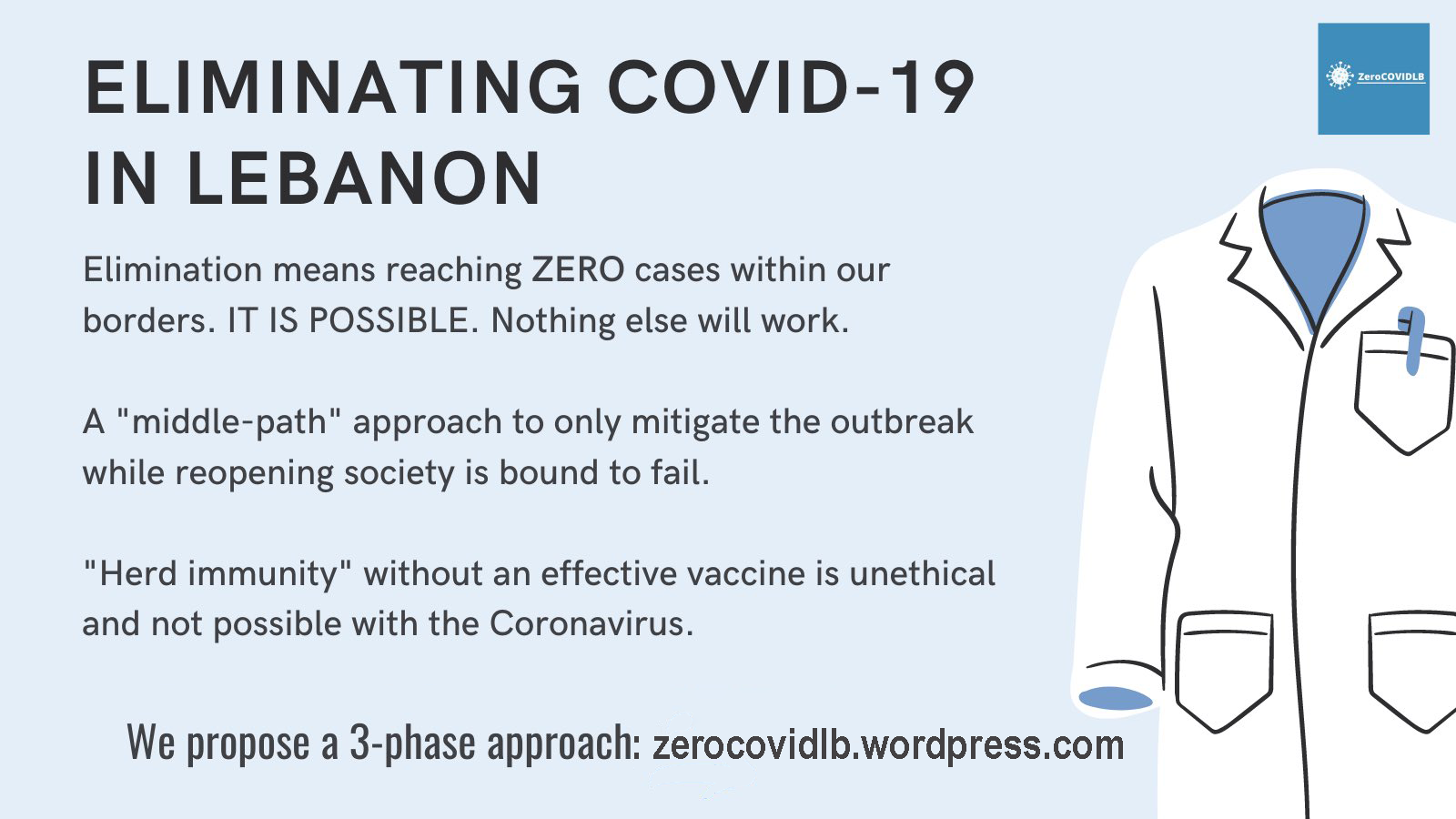
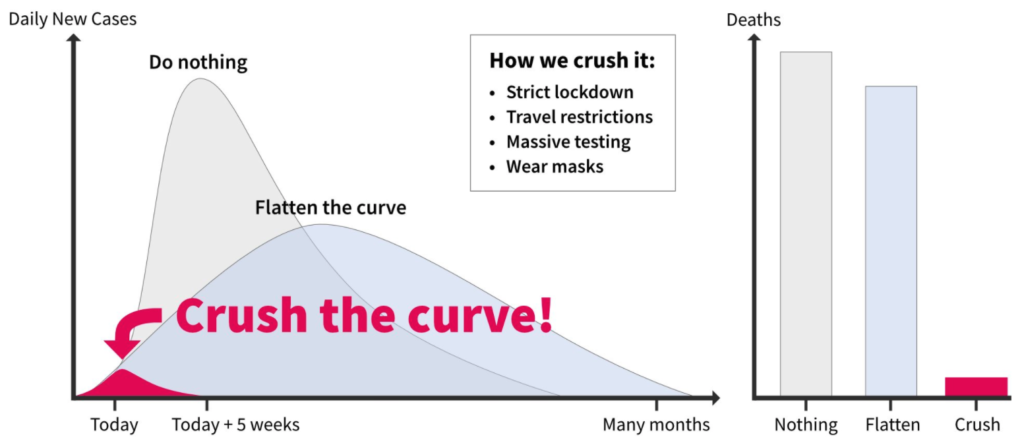
Jade Khalife, MD, MPH, MSc., health systems practitioner and researcher for Lebanon’s Joint Health Systems Research project, is arguing that the time is now for Lebanon—and the world—to replicate a set of coronavirus containment policies, called, “crushing the curve,” which show better results than the more widely adopted “flattening the curve” policies.
Medical staff tend to a COVID-19 patient (photo courtesy of University Hospitals)
Court of Claims Rules that the Ohio Department of Health must disclose the number of beds and other equipment available
By Bonnie Jean Feldkamp and Kathiann M. Kowalski
This article provided by Eye on Ohio, the nonprofit, nonpartisan Ohio Center for Journalism. Please join our free mailing list as this helps us provide more public service reporting.
As the ongoing pandemic continues to surge, the Ohio Court of Claims ruled last week that the Department of Health must share public records with Eye on Ohio, showing the number of beds and ventilators available for COVID-19 patients at individual hospitals throughout the state.
The ruling comes seven months after Eye on Ohio initially sought the records.
“In times of crisis transparency is paramount,” said Rebekah Crawford, who has her Ph.D. in Health Communication, Relating & Organizing from Ohio University.
People want credibility and clear lines around what is known and what is uncertain. “When risk communicators are at their best,” Crawford said, “they remain credible by showing what is known and what is not known and by being clear about why we don’t know, and what we’re going to do to find out.”
When Eye on Ohio first requested records, at the end of March, the state had only about 2,200 confirmed cases and 55 deaths, according to the online Johns Hopkins Coronavirus Resource Center. As of November 12, Ohio had approximately 274,500 confirmed cases, and about 5,700 people had died from the disease.
Ohio House Speaker Larry Householder appeared in federal court on his nuclear power plant bailout public corruption charges on July 21 (photo courtesy of Ohio State House News Bureau)
Case filings and delay of possible nuclear bailout combine to block Ohioans from learning more before voting.
This article provided by Eye on Ohio, the nonprofit, nonpartisan Ohio Center for Journalism in partnership with the nonprofit Energy News Network. Please join the Eye on Ohio free mailing list or the mailing list for the Energy New Network as this helps us provide more public service reporting.
By Kathiann M. Kowalski
Consumer advocates, industry organizations and environmental groups continue efforts to learn more about claims that FirstEnergy and current or former subsidiaries may have financed an alleged $60-million conspiracy to make sure Ohio’s nuclear bailout bill became law and withstood a referendum attempt.
Yet opposition by FirstEnergy in two regulatory cases and in state court has combined with the legislative recess to prevent those groups and voters from learning more before Election Day.
Two days before Carmen Bailey fell ill with COVID-19 in late April, she told her daughter not to take her to the hospital if she ever got the disease.
As her symptoms progressed over a week — first a mild headache, then congestion — the 52-year-old was too tired to work. And it got harder to care for the three children – ages 4, 5 and 8 — who live with her.
Still, she refused to seek treatment.
“Oh no, I’m not doing that. Ain’t nobody putting me on no ventilator,” Bailey said later, recalling the conversation with her daughter that followed a news report they watched about the virus.
As Bailey, a graphic designer who specializes in funeral service brochures, got sicker, her daughter had to tap on her back to help her cough up mucus from her lungs. A nurse from her doctor’s office urged her to go to an emergency room.
Statement of The Neighborhood and Community Media Association of Greater Cleveland
Neighborhood & Community Media Association (NCMA-CLE) was shocked and deeply saddened to learn of the passing of Mike Psenicka, owner of our member outlet, TheNeighborhood News.
As the third generation of Psenicka family ownership of TheNeighborhood News, Psenicka changed the shape of the newspaper and brought color to its pages; as a founding member of NCMA-CLE, he changed our shape and brought color to our organization.
Stephanie Geneseo asks Maxwell, 2, about the letters in his name as she writes in on his space-themed artwork. Geneseo created a curriculum for children who attend All Nestled Inn, her child care center in Chesapeake, Ohio, using space and aliens to help them understand the coronavirus pandemic, including how to fight germs.
CHESAPEAKE, Ohio — The children at Stephanie Geneseo’s home-based child care center dart around in astronaut helmets while they battle green googly-eyed COVID alien germs, using play to learn about hand washing in a pandemic that shows no signs of letting up.
“I want to make it fun so that it didn’t seem like something bad or weird to them,” Geneseo says. “We’ve done everything we can to make it as normal to their day as it could be,” she said in July after she reopened All Nestled Inn, her center in Chesapeake, Ohio.
The return to caring for children after a 10-week coronavirus shutdown was anything but normal for the 51-year-old, known as Mrs. Steffy to the families she serves.
Keeping her young charges healthy weighs on Geneseo as she works 18-hour days, watching children from early morning to midnight, to keep the business she spent 22 years building afloat.
The order agrees that spending should be open to review but first requires the company to review itself.
By Kathiann M. Kowalski
This article provided to The Tremonster through an investigative journalism collaboration withEye on Ohio, the nonprofit, nonpartisan Ohio Center for Journalism in partnership with the nonprofit Energy News Network. Please join Eye on Ohio’sfree mailing list or the mailing list for the Energy News Network as this helps us provide more public service reporting.
Regulators are requiring FirstEnergy to show that its Ohio utility ratepayers didn’t foot the bill, “directly or indirectly,” for political or charitable spending in support of the state’s nuclear and coal bailout bill. Yet that order is much more lenient than the state’s official consumer advocate had sought.
Questions about possible improprieties arose after former House Speaker Larry Householder, R-Glenford, was arrested on July 21. That case involves an alleged criminal conspiracy by him and others to pass House Bill 6 last year and then to defend it against a citizens’ referendum. The federal complaint and indictment allege that the defendants received approximately $60 million from “Company A” — apparently FirstEnergy — and its subsidiaries and affiliates.
Contains information related to marketing campaigns of the user. These are shared with Google AdWords / Google Ads when the Google Ads and Google Analytics accounts are linked together.
90 days
__utma
ID used to identify users and sessions
2 years after last activity
__utmt
Used to monitor number of Google Analytics server requests
10 minutes
__utmb
Used to distinguish new sessions and visits. This cookie is set when the GA.js javascript library is loaded and there is no existing __utmb cookie. The cookie is updated every time data is sent to the Google Analytics server.
30 minutes after last activity
__utmc
Used only with old Urchin versions of Google Analytics and not with GA.js. Was used to distinguish between new sessions and visits at the end of a session.
End of session (browser)
__utmz
Contains information about the traffic source or campaign that directed user to the website. The cookie is set when the GA.js javascript is loaded and updated when data is sent to the Google Anaytics server
6 months after last activity
__utmv
Contains custom information set by the web developer via the _setCustomVar method in Google Analytics. This cookie is updated every time new data is sent to the Google Analytics server.
2 years after last activity
__utmx
Used to determine whether a user is included in an A / B or Multivariate test.
18 months
_ga
ID used to identify users
2 years
_gali
Used by Google Analytics to determine which links on a page are being clicked
30 seconds
_ga_
ID used to identify users
2 years
_gid
ID used to identify users for 24 hours after last activity
24 hours
_gat
Used to monitor number of Google Analytics server requests when using Google Tag Manager
1 minute
Jetpack's built-in visitor analytics. It records page views, referring sites, search terms, and outbound link clicks, and also carries the shared visitor-tracking library used by Jetpack Instant Search and WooCommerce Analytics.
This cookie stores your preferences and other information, in particular preferred language, how many search results you wish to be shown on your page, and whether or not you wish to have Google’s SafeSearch filter turned on.
10 years from set/ update
YSC
Registers a unique ID to keep statistics of what videos from YouTube the user has seen.
Session
DEVICE_INFO
Used to detect if the visitor has accepted the marketing category in the cookie banner. This cookie is necessary for GDPR-compliance of the website.
179 days
LOGIN_INFO
This cookie is used to play YouTube videos embedded on the website.
2 years
VISITOR_PRIVACY_METADATA
Youtube visitor privacy metadata cookie
180 days
GPS
Registers a unique ID on mobile devices to enable tracking based on geographical GPS location.
1 day
VISITOR_INFO1_LIVE
Tries to estimate the users' bandwidth on pages with integrated YouTube videos. Also used for marketing